NEWS & SCIENCE · BRISBANE, QUEENSLAND
UQ researchers reveal how molecular chains couple with superconductors
Published · Cenlocal summary
An international team built chains of triangulene molecules on a superconducting surface, finding their behaviour changes with chain length.
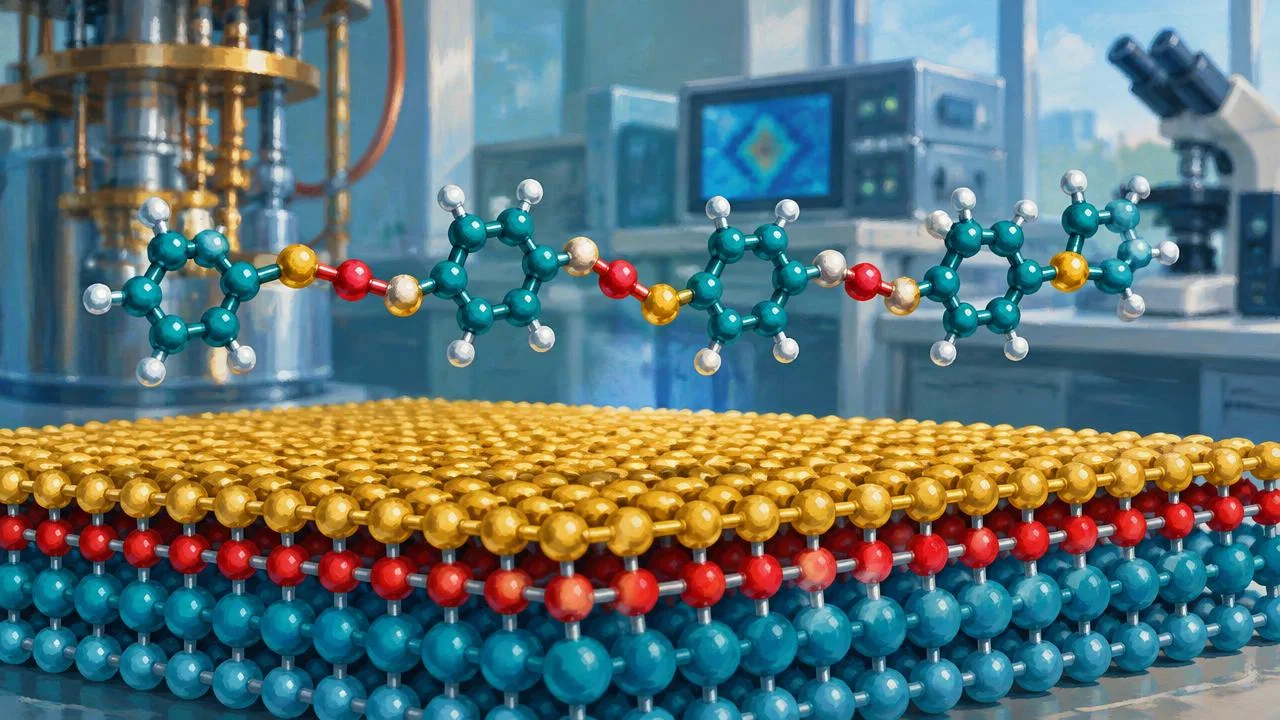
University of Queensland-linked researchers have combined chains of carbon-based molecules with a superconducting surface to study quantum behaviour at molecular scale. The work was published in Nature on 14 October and reported by UQ on 15 October 2026. It was led by Dr Katerina Vaxevani at CIC nanoGUNE in Spain before she joined UQ.
The team assembled triangulene chains on a gold film whose superconducting properties were induced by an underlying superconducting material. This arrangement allowed them to build and examine molecular chains while bringing superconductivity into the same system.
Scanning tunnelling microscopy and spectroscopy revealed different behaviour in chains with odd and even numbers of molecular units. Odd-numbered chains interacted with the superconducting surface in a way not seen in the even-numbered chains. The finding is fundamental research, not a working quantum device, but offers a platform for studying nanoscale quantum technologies.
Found this useful? Share it with someone.
Sources & Further Reading
This is an original Cenlocal summary. Cenlocal is not the original reporter; facts are attributed to the sources below.