ENVIRONMENT & WILDLIFE · LOCKYER CREEK CATCHMENT, WEST OF BRISBANE
Lockyer Creek restoration could deliver major benefits for Brisbane water
Published · Cenlocal summary
A UQ-led study of 95 kilometres of Lockyer Creek found riverbank restoration can improve water quality and reduce flood-related supply risks.
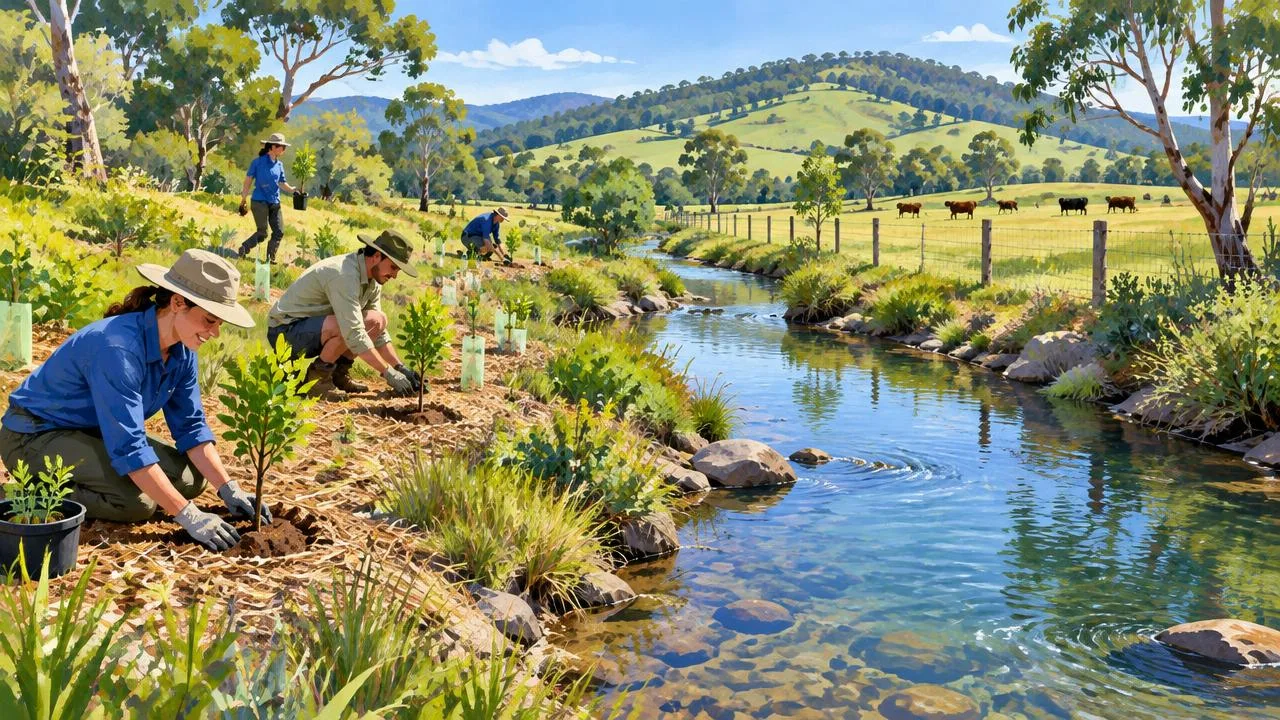
Restoring riverbanks along 95 kilometres of Lockyer Creek could benefit the environment and drinking-water supplies downstream, according to University of Queensland research reported on 29 September 2026. Sediment from the creek affects water used by Brisbane residents.
The study, led by UQ environmental economist Dr Joseph McMahon with Griffith University co-author Associate Professor Jim Smart, assessed measures including native replanting, riverbank fencing and off-stream livestock watering points. Stable, vegetated banks can reduce erosion and intercept sediment and pathogens.
The researchers estimated potential returns of up to 400 per cent. Using data from 2008 to 2014, the study also found a potential reduction in flood-related muddy-water treatment disruption risk from about five per cent to about 0.4 per cent. These are research estimates, not guaranteed future outcomes. The work links upstream land management with Brisbane’s water quality, alongside possible biodiversity and carbon-storage benefits.
Found this useful? Share it with someone.
Sources & Further Reading
This is an original Cenlocal summary. Cenlocal is not the original reporter; facts are attributed to the sources below.