SCIENCE · CANBERRA / ANU RESEARCH CONTRIBUTION, ACT
ANU researchers help clear hurdle for gravitational-wave detector upgrades
Published · Cenlocal summary
ANU scientists contributed to a laser-control method that could support more sensitive gravitational-wave observations.
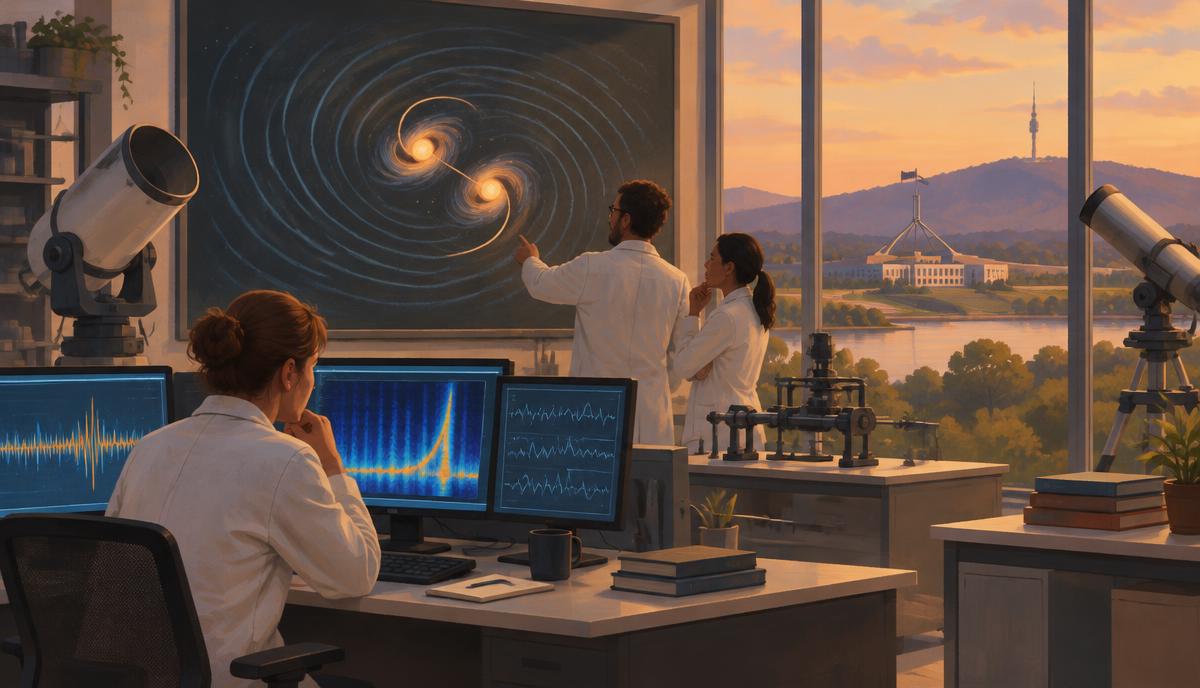
Australian National University researchers have helped test a way to prepare gravitational-wave detectors for observations, addressing a technical obstacle facing future upgrades. An official University of Western Australia announcement on 16 October 2026 described the work by OzGrav researchers at ANU, UWA and the University of Adelaide.
Detectors such as LIGO need mirrors held precisely in position before measuring disturbances in space-time. New crystalline mirror coatings intended to improve sensitivity absorb the green light used by the existing locking system. The team tested an alternative using infrared light that the coatings do not absorb.
Special crystals converted laser frequencies so control could pass from the locking laser to the detector’s main laser. Researchers reported a stable handover taking about 60 seconds, repeated successfully over several days. The findings were published in Physical Review D. The work highlights ANU’s contribution to the research collaboration; it demonstrates a proposed technical approach rather than a completed detector upgrade.
Found this useful? Share it with someone.
Sources & Further Reading
This is an original Cenlocal summary. Cenlocal is not the original reporter; facts are attributed to the sources below.